February 6, 2025 12:53 pm
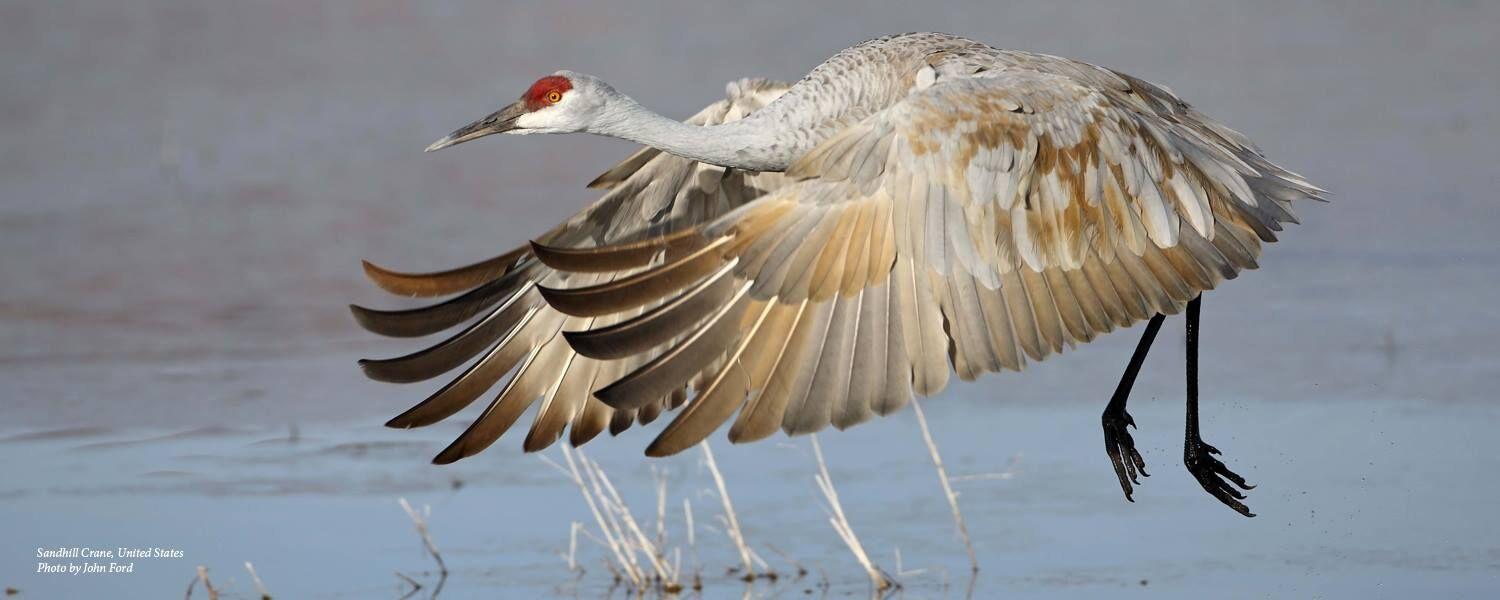
The Kentucky Department of Fish and Wildlife Resources (KDFWR) recently reported visibly ill and dead Sandhill Cranes in Tennessee, Kentucky and Indiana. Highly Pathogenic Avian Influenza (HPAI) has been initially confirmed in some of the dead birds including two from Barren River Lake in south central Kentucky. Both were sent to Southeastern Cooperative Wildlife Disease Study (SCWDS) for testing. Five sick birds on roost could still fly, and 20 dead cranes were found on the mudflats, in the trees/shoreline area, and floating in the water.
If you encounter a sick or dead crane please do not handle them!
KDFWR is especially interested reports of sick cranes observed outside Barren County, Kentucky. Please report any sick or dead cranes using the Wild Bird form on the KDFWR website: https://fw.ky.gov/Wildlife/Pages/Report-Wildlife-Disease.aspx
The following excerpts are from the March 2023 Eastern Crane Bulletin
Avian flu outbreak and its impact on the endangered Whooping Crane? (page 37)
“We’ve had our eye on this problem since the early 2000s,” said Dr. Barry Hartup, Veterinarian and ICF Director of Conservation Medicine. “We got particularly involved in this in 2005 when there was a massive outbreak of wild birds in China.” Cranes are among the most endangered bird families in the world, with 10 out of 15 species threatened. So, an outbreak of disease can be devastating to already fragile populations.
“Outbreaks are like wildfires,” Hartup said. “These are small, hyper-propagation events. They are virtually impossible to predict or prevent in the wild.” The disease is spread when infected birds shed the virus in their saliva, nasal secretions, and feces, according to the Centers for Disease Control and Prevention. Susceptible birds become infected when they encounter the virus as it is shed from infected birds or surfaces contaminated with the virus. Some birds carry the virus without getting sick. In other cases, it causes mass mortality.
As HPAI circulates, Hartup said Whooping Cranes will face additional risk during Spring and Fall migration – at stopovers along the migration route where the cranes will undoubtedly be in close proximity to waterfowl.
HPAI was also reported in 2023 in the non-migratory population of Sandhills in Florida.
Florida bird flu cases increase, now include Sandhill Cranes, White Pelicans (page 38)
Researchers at the University of Florida first reported the Sandhill Crane infection to the Florida Department of Agriculture and Consumer Services earlier in January 2023. The bird was found on a private property in Gainesville during the week of January 9. Infected birds can spread the virus through saliva, nasal secretions, and feces, according to the commission.

To learn more, join the International Crane Foundation Director of Conservation Medicine, Diana Boon, DVM on Tuesday February 11 for a free webinar (registration required):
Expert Updates: Bird flu status and resources with Diana Boon, DVM, ICF Director of Conservation Medicine
Bird flu—otherwise known as avian influenza—has been in the news due to major impacts to captive poultry flocks and dairy herds. But how does this virus affect wild birds and conservation efforts? Join our Director of Conservation Medicine, Diana Boon, DVM, to learn more about Highly Pathogenic Avian Influenza (HPAI), how the virus is affecting bird populations, and how the International Crane Foundation stays prepared to look after cranes in human care and wild populations. Dr. Boon will share the status of the virus today and provide resources to keep you informed as the situation evolves.
Posted by KY4cranes
Categories: KY Coalition for Sandhill Cranes
Tags: avian-influenza, Barren River, bird-flu, florida, h5n1, health, hpai, Indiana, Kentucky, news, sandhill cranes, Tennessee, Whooping cranes
Mobile Site | Full Site
Get a free blog at WordPress.com Theme: WordPress Mobile Edition by Alex King.